
Triggr:
The invisible financial layer
$150B Peer to Peer payment industry
Fintech/P2P Payments
95% reduction in time to reconciliation
iOS, Android, Apple watch
Overview
Spending is instant. Getting paid back is not.
Paying for something has never been easier. A tap of your phone at a coffee counter and you are done in under a second. But the moment you split that bill with friends? You are back in 2005 manually typing names, amounts, and notes into an app you will probably forget to open for three days.
This disconnect is what I call The Manual Toll the hidden mental burden and social friction that follows every shared experience. It is not just annoying. It is costing people real money and real relationships.
The Business problem
A $150 billion market with a $2 billion leak
The peer-to-peer payment market is enormous. But beneath its surface lies a fundamental gap in how people actually behave. And it is bleeding money every single day.
💸
The $2B Leak
Every year, billions in social debt go unclaimed because the details of a shared transaction fade from memory within hours of the event.
😫
Entry Fatigue
62% of users abandon expense-sharing apps because they refuse to act as manual data entry clerks for their own social lives.
⏱️
Memory Decay
The critical window to capture a transaction is seconds after the tap not hours later when most apps ask you to reconcile.
📈
Market Opportunity
Capturing the social context of a purchase at the exact moment it happens is the untapped layer every major wallet app is missing.
THE USERS
Real people, not just demographics
Through my discovery phase, I moved beyond broad generational labels to understand the specific emotional moments that create friction. Two archetypes emerged that shaped every design decision.
Add 2 user personas
Both Maya and Jake are not irresponsible. They are human. The system is failing them not the other way around.
User Pain Points
Three friction points that break financial autonomy
⏳
Reconciliation Decay
The time gap between the physical tap and the digital log creates a memory tax. The longer the gap, the less accurate the entry until people stop trying altogether.
😬
Social Awkwardness
Delayed logging turns a financial follow-up into an uncomfortable social moment. The lender feels rude for asking. The borrower feels guilty for forgetting. Nobody wins.
🤔
Contextual Confusion
In busy environments like airports or food courts, users lose track of which charge belongs to which group and the default response is to give up and absorb the cost.
Discovery
What I got wrong first and what that taught me
My initial assumption was that the core problem was forgetting to log expenses. So my first round of concepts focused on smart reminder systems push notifications prompting users to reconcile at the end of the day.
User interviews dismantled that assumption quickly.
Key insight
The problem was not forgetting to log. It was the gap between the physical moment and the digital log. By the time any reminder arrived, the contextual details had already decayed. Reminders surfaced anxiety with no way to resolve it.
This reframe changed the entire direction of the project. The solution could not live at the end of the day. It had to live at the exact moment of the tap before memory had any chance to fade.
Strategy
An appless philosophy
I made an early decision to abandon the traditional destination app model entirely. Instead of building a place users go to manage finances, I built an interface that lives in the gaps of the operating system.
My first prototype was a clean standalone dashboard. Testing showed users opened it fewer than twice a week always reactively, always after the memory had faded. It performed no better than the apps already failing in this space. So I scrapped it.
The pivot: use the phone's native hardware as the primary canvas. No new app to download, no new habit to build. The experience had to feel like a natural extension of paying not a separate administrative step after it.
Technical Problem-Solving
Building the invisible engine
Making this vision real required solving problems at the intersection of hardware and software. These were not surface-level design decisions. They were foundational to the product's credibility in fintech.
The solution
Interacting with states, not screens
⚡️
The Real-Time Nudge
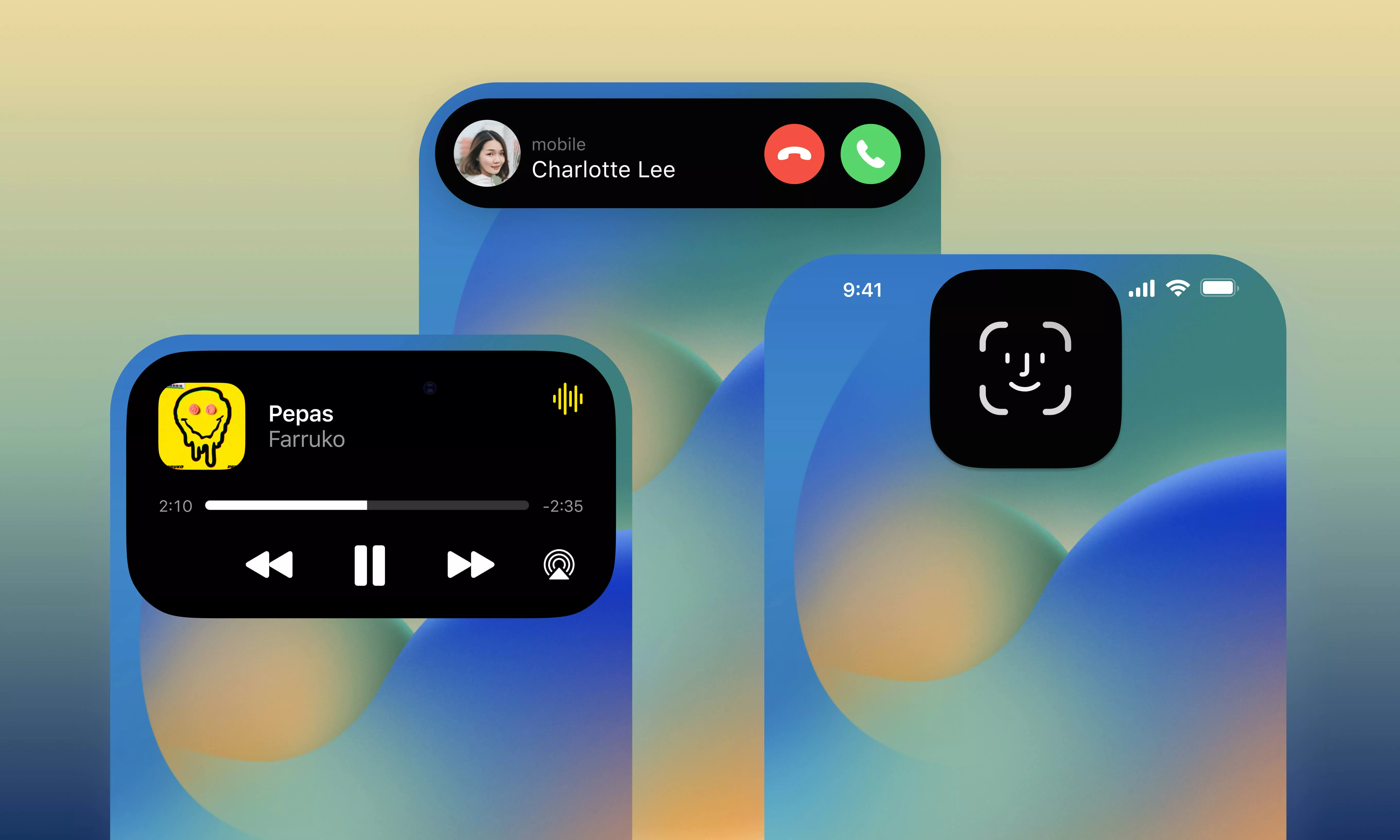
The moment a user taps to pay, the Dynamic Island expands into a functional micro-interface. One human question: is this for you or the group? Icons for recent groups appear instantly. One tap and the transaction is categorized before the phone goes back in the pocket.
👻
The Persistent Ghost Queue
For moments when the phone stays in a pocket, the Ghost Queue lives as a Live Activity docked in the Dynamic Island or lock screen. It captures transactions passively. A fluid gesture-based interface lets users clear a full day of expenses with simple directional swipes.
⌚️
The Multi-Device Flow
The appless experience extends to Apple Watch and Android notification layers. Whether it is a haptic buzz on the wrist or a quick-action button on a Pixel, the goal is the same: capture the intent while the receipt is still warm.
IMPACT
What success looks like and what the market already tells us
Triggr is a concept project. There were no user interviews or live prototype trials. Instead, the design goals were grounded in publicly available market data, app store research, and published UX studies on friction, memory decay, and mobile payment behavior.
The three numbers below represent the problem Triggr was designed to solve, sourced from the existing landscape and not invented metrics.
Of users abandon expense-sharing apps due to manual entry burden. Source: P2P payment UX research and app store review analysis across Splitwise and Venmo.
In social debt goes unclaimed annually due to memory decay after shared transactions. Source: Peer-to-peer payment market studies.
Target time to log a transaction with Triggr versus the industry average of several minutes with manual entry apps.
REFLECTION
What success looks like and what the market already tells us
Triggr is a concept project. There were no user interviews or live prototype trials. Instead, the design goals were grounded in publicly available market data, app store research, and published UX studies on friction, memory decay, and mobile payment behavior.
The three numbers below represent the problem Triggr was designed to solve, sourced from the existing landscape and not invented metrics.
REFLECTION
The biggest lesson from Triggr was not technical. It was about intellectual honesty in the design process being willing to scrap a working prototype when the evidence shows it solves the wrong problem. The reminder-based model worked. It just did not solve anything that mattered.
This project also taught me that the future of utility software is not in more features it is in better placement. Designing an appless experience required me to stop thinking about screens and start thinking about states.
Triggr represents a shift from software as a tool to software as an agent. By removing The Manual Toll, we did not just build a better tracker. We built a system that lets people focus on the experience of being together rather than the cost of it.